In heavy cyclical manufacturing franchises such as Hoa Phat Group (HOSE: HPG), the most durable risk-adjusted equity returns rarely originate at the peak of global steel price cycles; rather, they emerge right at the operational inflection point when a multi-year greenfield CapEx program completes construction, pivoting from peak cash absorption to commercial volume ramp-up, Free Cash Flow generation, and balance-sheet deleveraging. The 2026–2027 window marks precisely that historic inflection for Hoa Phat as the Hoa Phat Dung Quat 2 Integrated Steel Complex brings its blast-furnace phases into synchronized commercial operation.
- Step-Change in Domestic HRC Scale: With both phases of Dung Quat 2 fully operational (adding 5.6 million tonnes/year of high-grade Hot-Rolled Coil — HRC), Hoa Phat’s total crude steel capacity exceeds 14.5 million tonnes/year, placing HPG among the world’s top 30 steelmakers.
- Domestic HRC Absorption Backed by Trade-Remedy Shields: Vietnam’s domestic HRC demand stands at ~13–15 million tonnes/year (supplying galvanized sheet, steel pipe, mechanical engineering, container fabrication, and auto parts), reinforced by anti-dumping duties against predatory priced imports that anchor Dung Quat 2’s domestic off-take.
- Passing Peak CapEx — Free Cash Flow (FCF) Inflection: Following VND 75,000–85,000 billion in Dung Quat 2 capital expenditures across 2023–2025, CapEx intensity drops sharply from late 2026 onward while annual operating cash generation (depreciation plus net profit) surpasses VND 24,000–28,000 billion.
- Cyclical P/B Valuation Discipline: For integrated blast-furnace steelmakers, Price-to-Book (P/B) provides a far more reliable anchor than P/E at the start of capacity ramp-ups; accumulating within 1.30x–1.48x P/B offers a compelling 24–36 month Margin of Safety as ROE rebuilds toward 15%–17%.
1. Dung Quat 2 Commercial Ramp-Up: Reshaping Vietnam’s Upstream Flat-Steel Industry
Understanding the strategic significance of the VND 85,000 billion Hoa Phat Dung Quat 2 Integrated Steel Complex (located in Dung Quat Economic Zone, Quang Ngai) requires examining Vietnam’s longstanding structural steel imbalance. Whereas Vietnam’s long-steel segment (construction rebar and wire rod) is fully supplied domestically — with Hoa Phat commanding a dominant 36%–38%+ market share — upstream flat steel, specifically Hot-Rolled Coil (HRC), historically required imports to meet 55%–65% of annual consumption across galvanized steel, pipe, and mechanical fabrication industries.
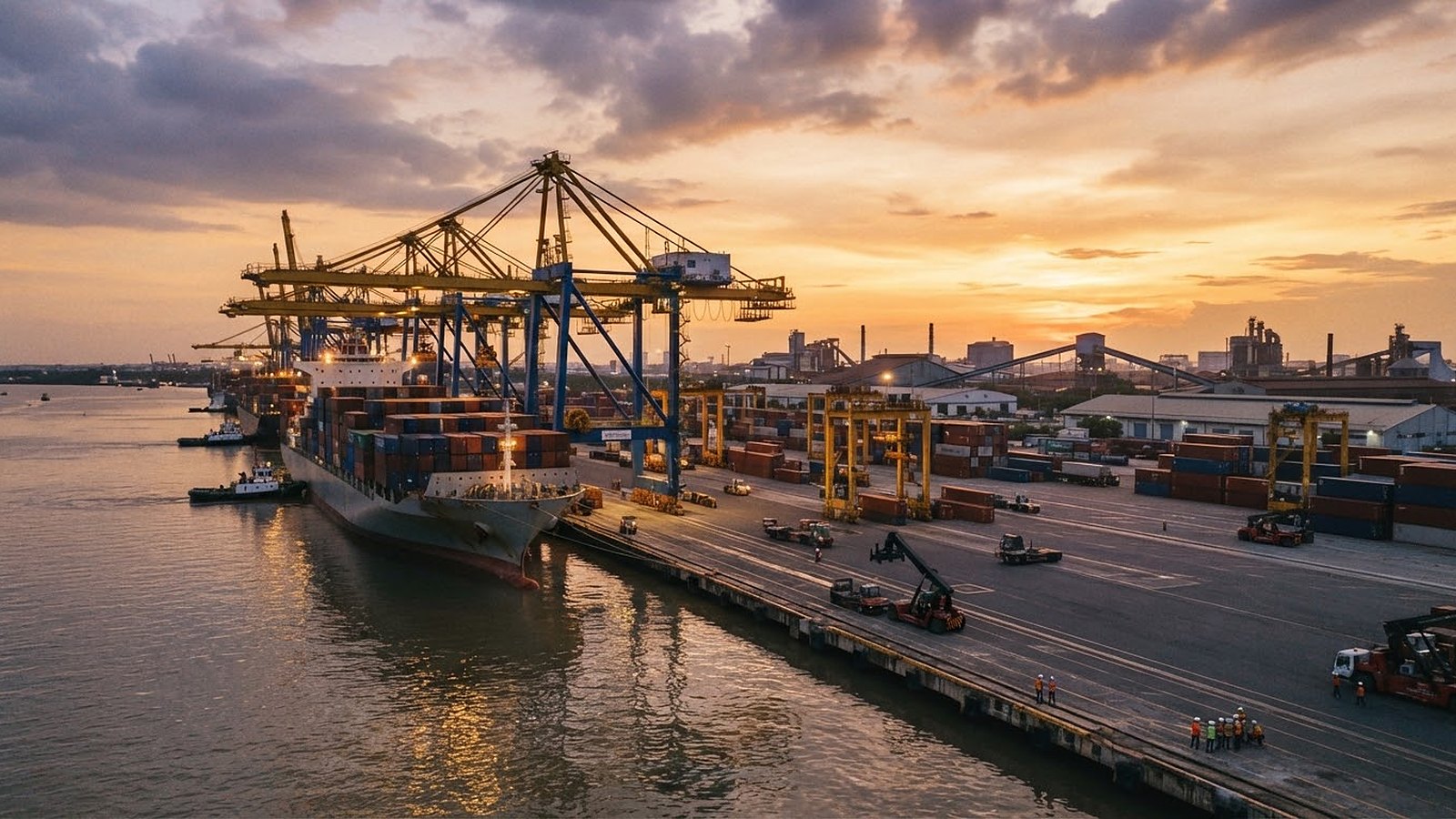
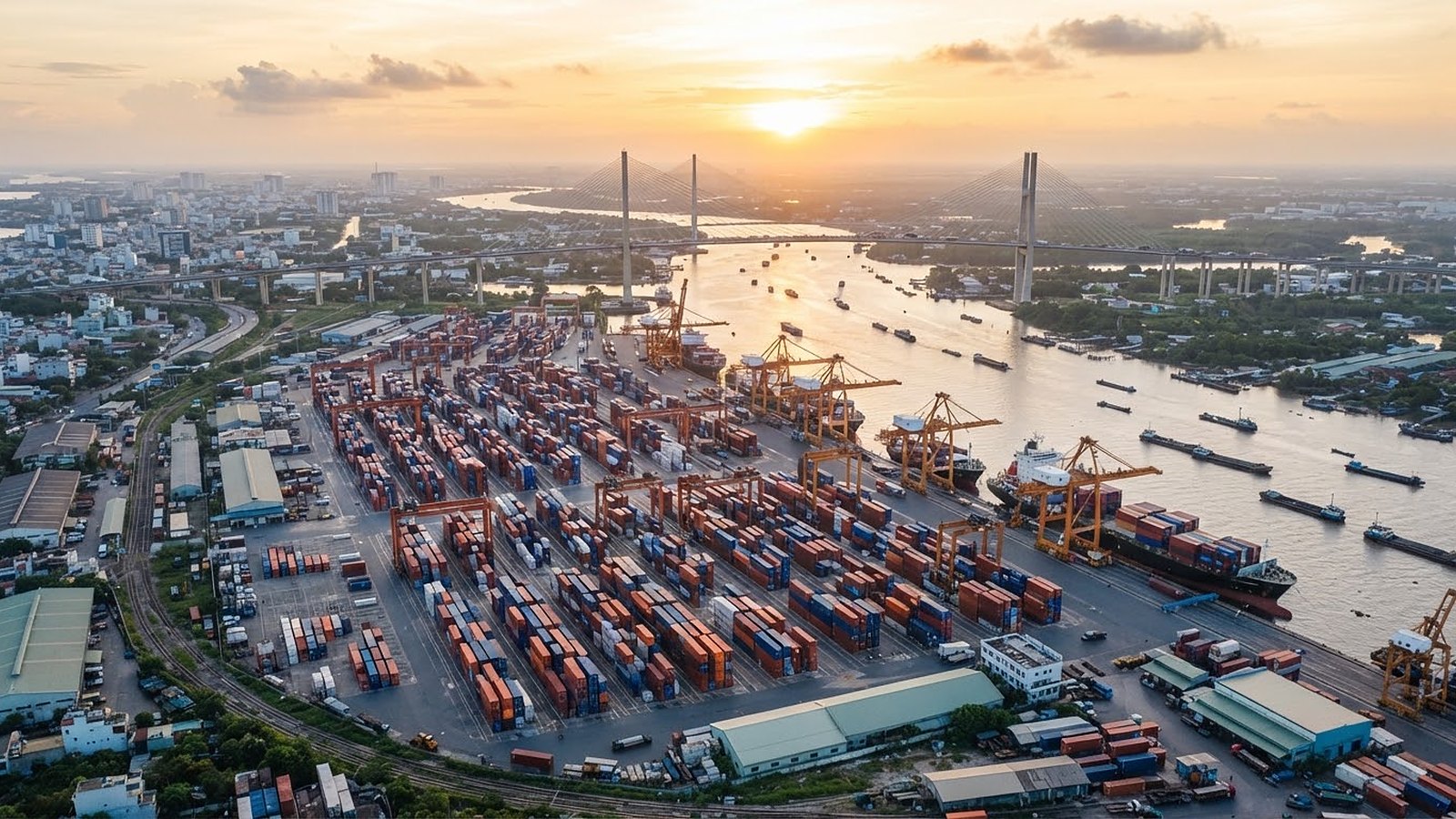
By commissioning two large-scale 2,500 m³ European-technology blast furnaces (featuring fuel-efficient smelting and waste-heat power recovery generating 85%–90% of internal electricity needs) and ramping utilization to 75%–90% across 2026–2027, Dung Quat 2 adds 5.6 million tonnes of annual HRC capacity. Critically, the complex sits directly adjacent to Hoa Phat’s captive Dung Quat deep-water port capable of berthing 200,000 DWT bulk carriers importing iron ore directly from Brazil and Australia and shipping finished coils south or overseas — saving USD 12–18/tonne in freight and transshipment costs relative to inland mills.
Furthermore, domestic trade-remedy protections via anti-dumping tariffs against dumped imported HRC establish a level competitive playing field, enabling Hoa Phat to place 75%–80%+ of HRC output directly into the higher-margin, lower-volatility domestic market rather than relying on spot export markets.
1.1. Advancing into High-Spec Engineering Steel and High-Speed Rail Track
Beyond commercial-grade HRC (SAE1006, SS400), Hoa Phat is steadily mastering high-grade alloy steel metallurgy for automotive tire bead wire, precision fasteners, structural profiles, and high-speed railway rail tracks ahead of Vietnam’s national rail buildout over the coming decade — segments protected by steep technical barriers and superior margins.
2. Steel Conversion Spreads and Balance-Sheet Resilience
In analyzing Blast Furnace–Basic Oxygen Furnace (BF–BOF) steelmakers, retail investors frequently fixate on headline finished-steel prices while overlooking the true driver of HPG’s gross margin: the “Steel Conversion Spread” (HRC / Rebar selling price minus [1.6 × 62%-Fe Iron Ore price + 0.55 × Australian Hard Coking Coal price]). Even when finished steel prices move sideways at moderate levels, iron ore stabilizing around USD 90–102/tonne alongside softer coking coal prices allows HPG’s consolidated gross margin to expand steadily from its 11% trough toward 14.5%–16.8%.
A second critical accounting dynamic during mega-project commissioning is the dual income-statement impact of new fixed-asset depreciation and the cessation of interest capitalization. While Dung Quat 2 sat in construction-in-progress, project-loan interest was capitalized onto the balance sheet; once each furnace phase enters commercial service, both depreciation charges and interest expense hit the income statement directly.
Auditing HPG’s late-2026 balance sheet confirms remarkable financial conservatism for a capital-intensive manufacturer: although total short- and long-term debt peaks near VND 78,000–84,000 billion, Hoa Phat simultaneously holds VND 30,000–35,000 billion in cash and bank term deposits. Consequently, Net Debt / Equity remains tightly contained at ~0.42x–0.48x, while Net Debt / EBITDA is projected to deleverage rapidly from 2.4x to below 1.6x in 2027 as incremental Dung Quat 2 EBITDA scales.
2.1. Disciplined Raw-Material Inventory Turnover Mitigates Write-Down Shocks
Incorporating lessons from the 2022 global steel downturn, HPG management maintains lean iron-ore and coking-coal inventories calibrated to 2.5–3.5 months of production rather than speculative stockpiling — keeping input cost of goods sold closely aligned with spot markets and neutralizing quarter-end inventory write-down shocks.
| Operating & Financial Metric | Unit | 2024A | 2025A | 2026E | 2027F |
|---|---|---|---|---|---|
| Total Steel Sales Volume | Million tonnes | 8.45 | 9.80 | 11.85 | 13.60 |
| Of which: Hot-Rolled Coil (HRC) Volume | Million tonnes | 3.05 | 4.15 | 5.90 | 7.45 |
| Consolidated Net Revenue | VND bn | 138,855 | 158,400 | 186,500 | 214,000 |
| Consolidated Gross Margin | % | 13.3% | 14.1% | 14.8% | 15.8% |
| Consolidated EBITDA | VND bn | 23,400 | 27,900 | 34,200 | 41,500 |
| Net Profit After Tax (NPAT) | VND bn | 12,020 | 14,850 | 18,200 | 22,600 |
| Net Debt / Shareholders’ Equity | Multiple (x) | 0.46x | 0.49x | 0.44x | 0.31x |
| Interest Coverage Ratio (ICR) | Multiple (x) | 6.1x | 6.4x | 6.8x | 8.5x |
| Reference P/B & EV/EBITDA Multiples | Multiple (x) | P/B 1.58x | P/B 1.48x | P/B 1.42x | EV/EBITDA ~6.9x |
3. Cyclical Valuation Framework (P/B – EV/EBITDA) and Cash-Harvesting Horizon
Following Peter Lynch’s cyclical valuation framework and institutional underwriting norms, valuing HPG on standalone P/E invites pro-cyclical mistakes: cyclical stocks appear optically cheap at cycle peaks (5x–6x P/E on unsustainable peak margins) and optically expensive at cycle troughs (14x–16x P/E when newly commissioned plants carry full depreciation prior to reaching 100% utilization). Accordingly, GoldenKey anchors valuation jointly on Price-to-Book (P/B) and 2027F EV/EBITDA.
Across a decade of HOSE trading history, HPG has consistently formed long-term valuation troughs at 1.0x–1.25x P/B and expanded toward 2.1x–2.6x P/B upon reaching full utilization of major capacity expansions (as witnessed following Dung Quat 1 completion in 2020–2021). At current valuations around 1.38x–1.50x P/B and 2027F EV/EBITDA of just 6.8x–7.4x, market pricing reflects only a fraction of Dung Quat 2’s earnings power — leaving a compelling Margin of Safety over an 18–24 month capacity-absorption horizon.
3.1. Resumption of Cash Dividends Post-Dung Quat 2 CapEx
With equity retention requirements for Dung Quat 2 largely completed, surging positive Free Cash Flow (FCF) from 2027 onward positions Hoa Phat strongly to reinstate recurring cash dividends alongside term-debt paydowns — broadening institutional appeal among pension and income mandates.
Quantitative 3-Scenario Matrix & Thesis Invalidation Triggers
Domestic demand smoothly absorbs incremental HRC output with consolidated gross margins holding at 15.2%–15.8%; 2027 net profit approaches VND 22,000–23,000 billion, supporting fair-value P/B expansion toward 1.75x–1.90x.
Broad residential construction recovery across Northern and Southern Vietnam paired with Chinese crude-steel output cuts lifts steel selling prices by 8%–12%, propelling HPG’s ROE past 18%.
Sluggish civil construction keeps Dung Quat 2 Phase 2 utilization near ~65% during 1H 2027, compressing gross margins to 12.8%–13.5%; shares consolidate near book-value support of 1.20x–1.30x P/B.
Warning Thresholds & Thesis Invalidation Triggers:
- Consolidated gross margin falls below 11.0% for two consecutive quarters due to iron-ore and coking-coal input costs rising against falling HRC prices.
- Monthly HRC off-take at the Dung Quat complex trails 60% of nameplate capacity for more than six consecutive months.
- Net Debt / Equity breaches 0.75x due to committing to new non-core mega-CapEx projects prior to harvesting Dung Quat 2 cash flows.
- Independent Equity Valuation Dossier: Hoa Phat Group (HPG) — Detailed P/B, EV/EBITDA valuation bands and Margin-of-Safety accumulation zones.
- Corporate Bond Credit Dossier: HPG202501 — Credit health, Interest Coverage Ratio (ICR), and debt-service analysis for Hoa Phat Group.
- Underwriting Cyclical & Industrial Equities — How to audit CapEx cycles, depreciation schedules, and raw-material inventories.
This thematic research report has been independently prepared by the Research & Asset Allocation Division of GoldenKey Invest to provide a quantitative data framework and academic due-diligence methodology for private investors and family portfolios.
GoldenKey operates strictly under its Three-Pillar Fiduciary Mandate (No Client Fund Custody — No Discretionary Order Execution — No Guaranteed Return Promises) alongside full research independence: (1) No brokerage commissions or undisclosed distribution fees from issuers; (2) No proprietary trading that conflicts with client portfolios; and (3) No short-term speculative trading calls or unrealistic fixed-return guarantees. Every capital allocation decision must be evaluated against each investor’s distinct risk tolerance, liquidity horizon, and maximum drawdown capacity.