
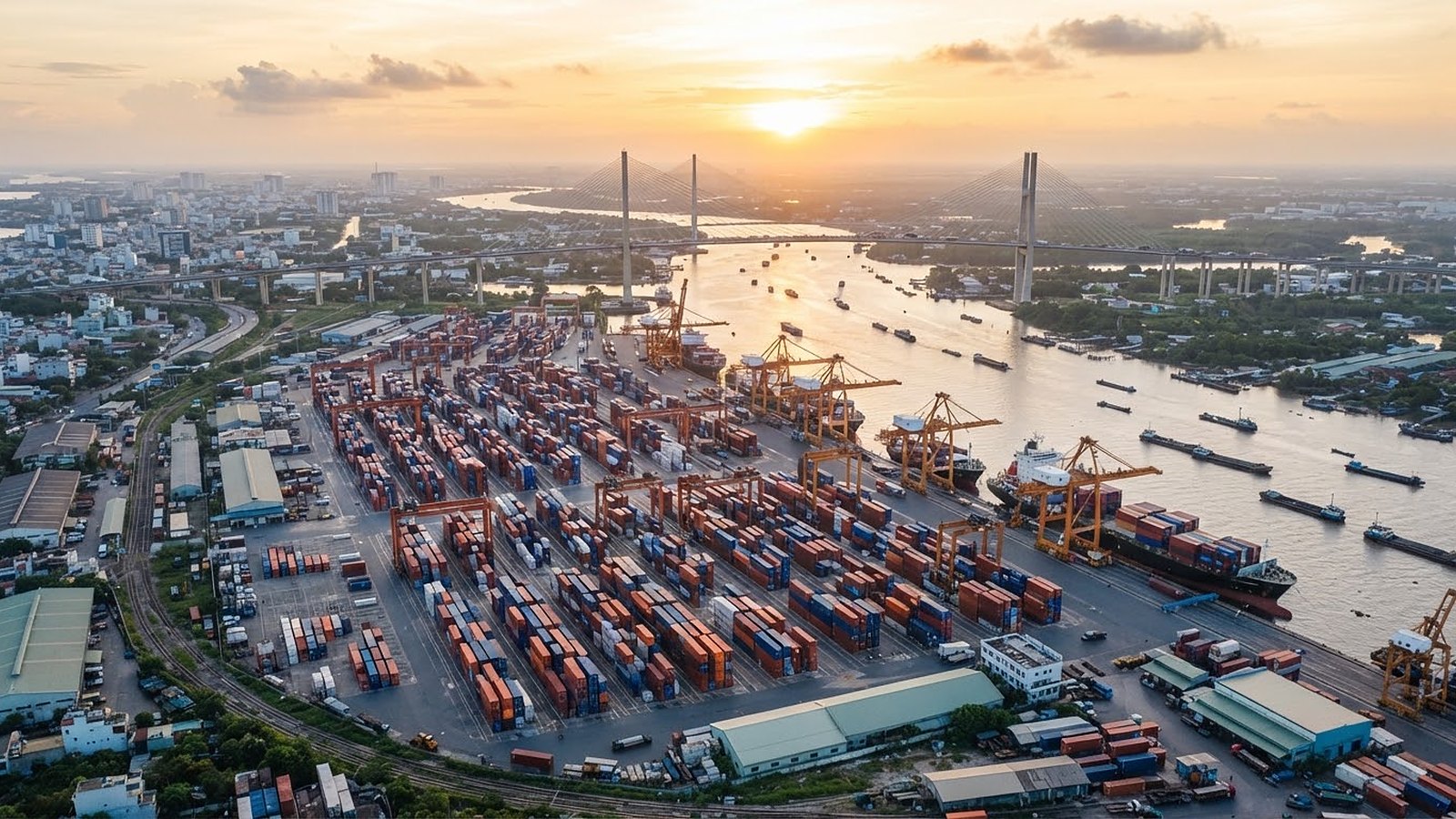
The pivotal 2026–2027 period marks a qualitative structural shift in Vietnam’s economic trajectory — transitioning from post-pandemic cyclical normalization to a multi-year expansion anchored in industrial upgrading and national infrastructure modernization. Sustaining real GDP growth among Asia’s fastest-growing economies (projected at 6.8%–7.3% per annum), Vietnam’s endogenous momentum is powered simultaneously by three real-economy engines: accelerated Public Infrastructure Disbursement across transport and energy megaprojects, record realized next-generation FDI inflows, and a durable recovery in export manufacturing.
- Public Infrastructure Disbursement as Seed Capital: Annual state-budget public investment plans for 2026–2027 remain elevated above VND 790,000–850,000 billion, prioritizing the North–South Expressway corridor, Long Thanh International Airport, metropolitan ring roads, and the 500kV transmission grid — generating a 1.35x to 1.50x fiscal multiplier across the private sector.
- Realized FDI Reaches a Higher-Quality Peak: Actual disbursed FDI inflows reach USD 25.0–26.8 billion annually, pivoting visibly from labor-intensive assembly toward semiconductor packaging/testing, precision electronics, clean energy, and R&D centers.
- Industrial Production (IIP) and Exports Accelerate Fundamentally: Manufacturing IIP expands 9.2%–10.4% YoY, lifting total bilateral trade turnover past USD 820–860 billion while maintaining a USD 22–26 billion annual merchandise trade surplus.
- Long-Term Capital Allocation Implications: The most transparent, direct beneficiaries reside in Industrial Park Real Estate, deep-water seaports, upstream construction materials (infrastructure steel, quarry stone), industrial utilities, and supply-chain commercial banks.
1. Strategic Public Infrastructure Disbursement: Compressing Logistics Costs and Unlocking Economic Corridors
Unlike short-lived consumption stimulus packages that risk stoking demand-pull inflation, Vietnam’s targeted fiscal expansion in 2026–2027 directly attacks structural national logistics bottlenecks — which historically absorbed 16.5%–17.0% of GDP, above emerging industrial peers. With public debt prudently contained at 36%–37% of GDP (well below the National Assembly’s 60% statutory ceiling), the Government commands ample fiscal headroom to accelerate infrastructure CapEx without crowding out private-sector credit.
On the ground, flagship national megaprojects are entering peak civil construction and equipment installation across the 5-year cycle: completing end-to-end connectivity along the Eastern North–South Expressway, accelerating terminal and runway packages at Long Thanh International Airport Phase 1, closing Ho Chi Minh City Ring Road 3 and Capital Region Ring Road 4, and advancing urban metro lines and deep-water maritime channels. Compressing inland transit times and linking satellite industrial hubs directly to deep-water ports trims road freight costs by 12%–18% for manufacturers.
For capital markets, the earnings transmission of Public Infrastructure Disbursement extends far beyond civil construction contractors (which typically operate on thin 3%–5% net margins under state unit-cost norms) to accrue far more durably to scaled upstream material producers — structural and prestressed steel, asphalt, and permitted open-pit stone quarries — while unlocking industrial land values along newly opened expressway interchanges.
1.1. Institutional Land-Clearance Reforms and the Amended Law on Public Investment
Higher realized disbursement rates (reaching 85%–92% of the Prime Minister’s annual target by fiscal year-end) stem from decentralizing project authority to provincial governments, separating site clearance into standalone sub-projects, and aligning land compensation schedules transparently — accelerating State Treasury cash circulation into commercial banks and material suppliers’ balance sheets.
2. Next-Generation FDI Inflows and Export Manufacturing Supply-Chain Recovery
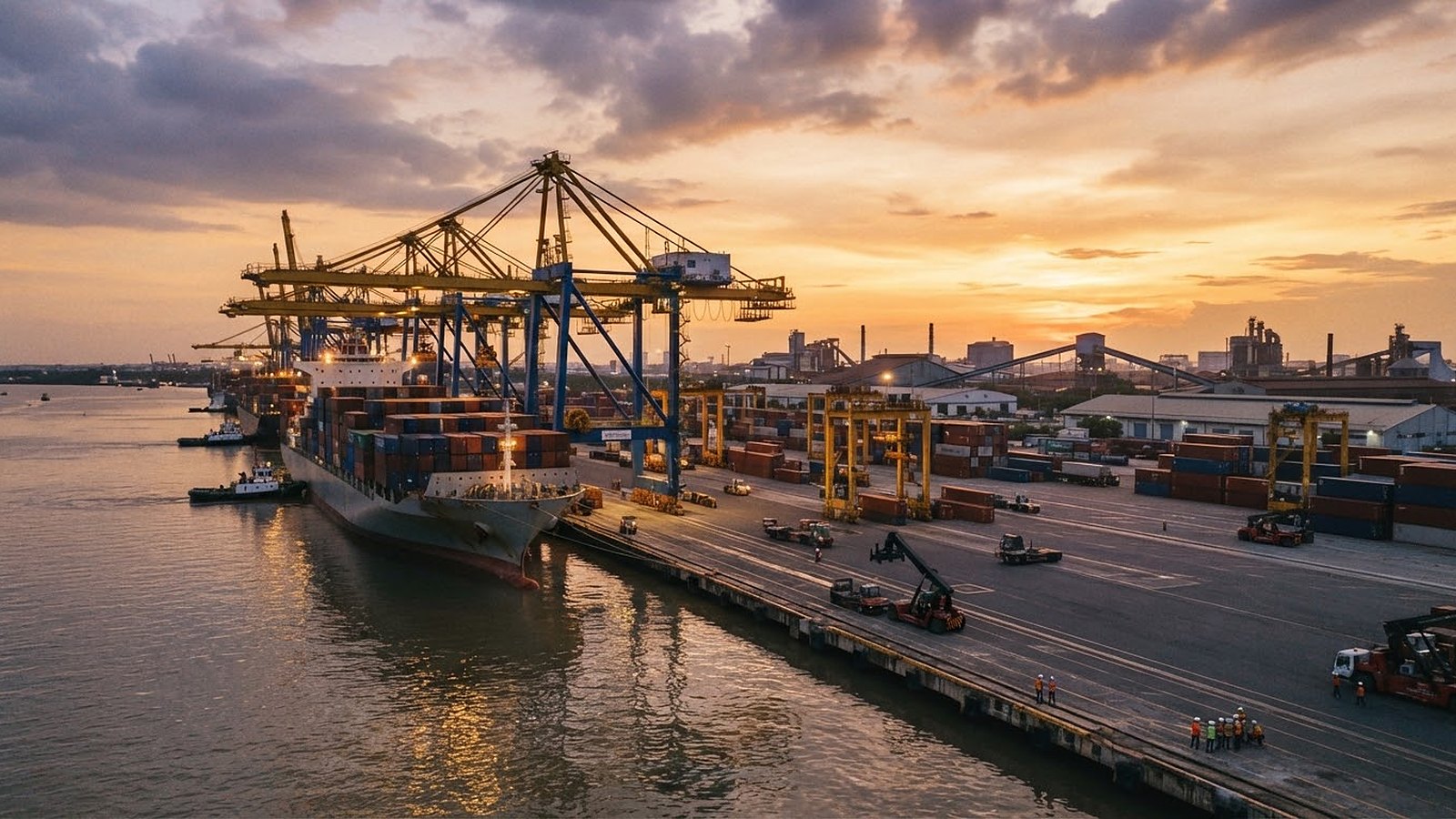
As global multinationals institutionalize “China Plus One” and “friend-shoring” supply-chain diversification to mitigate geopolitical and tariff concentration risks, Vietnam continues to cement its position as Southeast Asia’s indispensable manufacturing hub. Crucially, the defining hallmark of the 2026–2027 FDI cycle lies in higher technological intensity and domestic value addition. Beyond traditional textiles or basic assembly, next-generation industrial parks across Bac Ninh, Hai Phong, Quang Ninh, and Thai Nguyen in the North — alongside Ba Ria–Vung Tau, Binh Duong, and Dong Nai in the South — are capturing expansion waves in semiconductor assembly, testing, and packaging (ATP), AI networking hardware, precision optics, and EV components.
In evaluating FDI statistics, GoldenKey Research strictly separates “registered FDI” (medium-term capital commitments) from “realized/disbursed FDI” (hard foreign currency actually remitted into Vietnam to lease industrial land, build factories, and import machinery). Sustained 7%–9% annual growth in realized FDI to USD 25.0–26.8 billion per year provides the firmest underwriting for Vietnam’s export capacity over the next 3 to 5 years.
Alongside the FDI sector, domestic export manufacturers are experiencing solid order-book normalization now that US and European Union retail inventories have rebalanced. Vietnam’s Manufacturing Purchasing Managers’ Index (PMI) holds consistently in expansionary territory at 51.0–52.8, propelling 10%–14% annual export growth across electronics and computers, machinery, wooden furniture, sustainable textiles, and value-added seafood.
2.1. Real Domestic Consumption Recovery Powered by Industrial Wage Gains
Whereas domestic consumption lagged in 2024–2025 due to compressed factory overtime pay, rising export orders and overtime shifts in 2026–2027 are transmitting directly into household spending. Real retail sales of goods and consumer services (ex-price inflation) are expanding at 6.5%–7.2% YoY, underpinning modern retail chains, retail banking, and consumer technology platforms.
| Macroeconomic Indicator | Unit | 2025A | 2026E | 2027F Base Case | Asset-Class Transmission Impact |
|---|---|---|---|---|---|
| Real GDP Growth | % YoY | 6.8% | 7.0% | 6.9% – 7.2% | Supports 15%–17% corporate EPS expansion |
| Headline CPI (Annual Average) | % YoY | 3.6% | 3.5% | 3.6% – 3.9% | Preserves positive real rates & monetary stability |
| Realized FDI Disbursement | USD bn | 24.1 | 25.6 | 26.5 – 27.5 | Catalyzes Industrial Parks, Seaports & Power |
| State-Budget Public Infrastructure Disbursement | VND tn | 685 | 765 | 810 – 845 | Drives Infrastructure Materials (Steel, Stone) & Logistics |
| Merchandise Export Growth | % YoY | 13.2% | 11.8% | 10.5% – 12.0% | Sustains USD 22–26bn trade surplus |
| System-Wide Credit Growth | % YoY | 14.6% | 15.0% | 14.5% – 15.5% | Anchors banking sector Net Interest Income |
| Public Debt / GDP Ratio | % GDP | 36.4% | 36.8% | ~37.0% | Ample fiscal headroom; keeps VGB yields anchored |
3. Global Trade Risk Variables and Corporate Earnings Transmission Framework
An objective Fiduciary macroeconomic report never highlights growth tailwinds without quantifying external headwinds. For an economy whose trade openness approaches 185% of GDP, Vietnam’s primary 2026–2027 external risks center on rising trade protectionism, trade-remedy investigations (anti-dumping, countervailing duties, and rules-of-origin audits) from major importing partners, and carbon border standards such as the European Union’s Carbon Border Adjustment Mechanism (CBAM).
Precisely these stringent technical barriers are accelerating competitive consolidation within Vietnamese industries. Sector leaders operating vertically integrated upstream production (such as domestic hot-rolled coil steel smelted from iron ore, eco-industrial parks equipped with rooftop solar and closed-loop wastewater treatment, and ASC/BAP-certified aquaculture exporters with captive farming zones) not only clear tariff and compliance hurdles, but actively capture market share from undercapitalized competitors.
3.1. Three-Layer Indicator Cascade Translating Macro Data into Asset Allocation
Investors should track macro transmission across three sequential layers: Leading Indicators (new export orders inside monthly PMI surveys, industrial park MOU pre-leasing area, and public infrastructure tender awards); Coincident Indicators (commercial electricity consumption, container throughput across Cai Mep and Hai Phong ports, and manufacturing credit growth); and Confirming Indicators (gross margins and Operating Cash Flow (CFO) in quarterly corporate financial filings).
Quantitative 3-Scenario Matrix & Thesis Invalidation Triggers
Public infrastructure disbursement exceeds 88% of annual plan, realized FDI reaches ~USD 26–27 billion, and exports grow 11%; headline CPI remains anchored near 3.7%, creating an ideal backdrop for real assets and fundamental equities.
Accelerated high-tech megaproject disbursements paired with buoyant global trade propel GDP growth past 7.4%, drawing substantial long-only foreign institutional inflows into Vietnamese capital markets.
Heightened global trade friction slows merchandise export growth to 6%–7% and moderates GDP to 6.1%–6.3%; policymakers accelerate domestic Public Infrastructure Disbursement further to cushion external demand.
Warning Thresholds & Thesis Invalidation Triggers:
- Vietnam’s Manufacturing PMI drops below the 48.5 contraction threshold for three consecutive months alongside negative YoY export growth.
- Cumulative 9-month public infrastructure disbursement falls below 55% of annual plan due to raw-material bottlenecks or regulatory delays.
- Broad-based trade-remedy tariffs are imposed directly on flagship export categories accounting for over 20% of shipments to major trading partners.
- Live Vietnam Macroeconomic & Market Data Terminal — Track real-time GDP, CPI, FDI, PMI, and core monetary indicators.
- Independent Equity Valuation Dossier: Gemadept (GMD) — Benchmark deep-water port operator capturing direct upside from FDI and trade volumes.
- Independent Equity Valuation Dossier: Hoa Phat Group (HPG) — Core supplier of domestic infrastructure steel and upstream Hot-Rolled Coil (HRC).
This thematic research report has been independently prepared by the Research & Asset Allocation Division of GoldenKey Invest to provide a quantitative data framework and academic due-diligence methodology for private investors and family portfolios.
GoldenKey operates strictly under its Three-Pillar Fiduciary Mandate (No Client Fund Custody — No Discretionary Order Execution — No Guaranteed Return Promises) alongside full research independence: (1) No brokerage commissions or undisclosed distribution fees from issuers; (2) No proprietary trading that conflicts with client portfolios; and (3) No short-term speculative trading calls or unrealistic fixed-return guarantees. Every capital allocation decision must be evaluated against each investor’s distinct risk tolerance, liquidity horizon, and maximum drawdown capacity.