

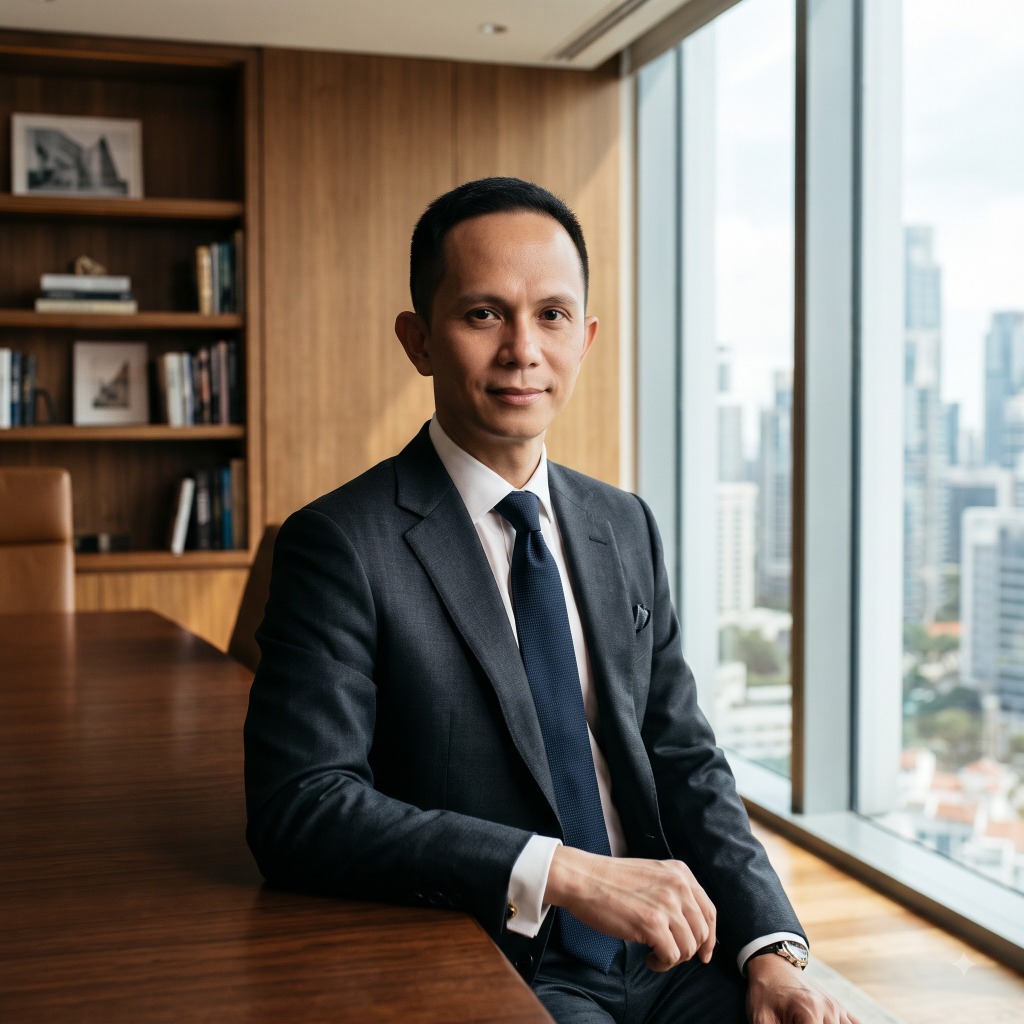
Nguyen Quoc Quang
Director of Quantitative Risk Management & Financial Modeling Architecture
Core Coverage: Dual-shock portfolio stress-testing, Maximum Drawdown control, multi-asset correlation matrices, and Family Trust structuring
“A resilient family portfolio is never measured by peak bull-market returns, but by its ability to survive the trough of a liquidity crisis intact without forced asset liquidation.”
Biography & Institutional Experience
Quantitative Risk Methodology & Portfolio Stress-Testing
Nguyen Quoc Quang heads Quantitative Risk Management and Financial Modeling Architecture on the Investment Committee at GoldenKey Invest. His research focuses on the phenomenon of correlation convergence toward 1.0 across Vietnamese risk assets during episodes of VND liquidity stress, establishing structural downside defense rules rather than cosmetic diversification.
He directly engineered the Wealth Health Scoring algorithm and the cross-asset Maturity Mismatch audit model, while leading specialized thematic research on Family Trust structures and principal drawdown protection discipline for multi-generational client families.
Fiduciary Code of Ethics & 30-Day Trading Blackout
- Three-Pillar Fiduciary Mandate: No Client Fund Custody — No Discretionary Order Execution — No Guaranteed Return Promises • Zero securities brokerage or discretionary asset management • Zero hidden commissions.
- Independent Research Firewall: Governed by a strict 30-day personal trading blackout across every asset ticker covered within the Committee's quantitative risk models.
Key Highlights & Analytical Focus
-
Chief Architect of the Dual Stress-Test Simulation System (-25% VN-Index shock paired with a Corporate Bond liquidity freeze) at GoldenKey Invest.
-
Specializes in dynamic cross-asset correlation modeling (CDs, Gold, Corporate Bonds, ETFs, Equities, and cash-yielding real estate) and Risk Parity discipline.
-
Leads thematic research on Family Trust structures under the 2024 Law on Credit Institutions and single-asset concentration risk governance.
-
Strictly adheres to the Three-Pillar Fiduciary Mandate and mandatory 30-day personal trading blackout policy.
Authored Dossiers & Research Publications
Global Macro & Markets Panorama (Nov 26, 2026): US Q3 GDP at 4.3%, Core PCE at 3.3%, FOMC Rate Expectations & USTR Tariff Transmission to Vietnam
US Q3 real GDP expanded 4.3% SAAR alongside a 3-year Core PCE high of 3.3% YoY, anchoring expectations for a 25 bps FOMC hike…
Read ReportQuantitative Framework of SBV Monetary Transmission (Nov 22, 2026): Decoding Base Money M0, Dual OMO–Bill Valves & Capital Market Lags
Quantitative framework decoding SBV monetary policy on Nov 22, 2026: VND 47,200B net liquidity sterilization, +22 bps VND-SOFR overnight spread, and 4–8 week valuation…
Read ReportPrivate Wealth Special Report (Nov 22, 2026): Domestic Family Trust Architecture Under the 2024 Law on Credit Institutions — Separating Legal Title, F2 Marital Firewalls & Fiduciary SWR Discipline
Deconstructing onshore Family Trusts under Articles 107 and 114 of the 2024 Credit Institutions Law: off-balance-sheet isolation, F2 marital firewalls, and 3.5%–4.0% SWR discipline…
Read ReportWeekend Briefing (Nov 22, 2026): Shifting Cross-Asset Correlations — Rebuilding Multi-Asset Risk Parity & Drawdown Discipline Ahead of the 26,000 FX Test
Analyzing cross-asset correlation shifts as VCB USD/VND reaches 25,980 and the 10Y–2Y VGB curve steepens to +136 bps. Deploying Equal Risk Contribution (ERC) to…
Read ReportEquity Portfolio Risk Management: Nonlinear Drawdown Mathematics, Margin Call Cross-Liquidation, and Single-Stock Position Caps
Mathematical proof of nonlinear drawdown asymmetry, forensic breakdown of Vietnam’s cross-liquidation force-sell margin trap, and institutional single-stock position-sizing guardrails for equity preservation.
Read ReportWealth Succession Planning, Sustainable Spending Discipline (3.5%–4.0% SWR), and Drafting a Family Investment Policy Statement (IPS)
Quantitative framework for calibrating a 3.5%–4.0% Safe Withdrawal Rate, neutralizing sequence-of-returns risk via a 3-bucket liquidity reserve, and codifying a multi-generational Family IPS.
Read ReportManaging Asset Concentration Risk: Ring-Fencing Operating Business Capital from the Family Sanctuary Reserve
Addressing the existential balance-sheet vulnerability of Vietnamese business founders: diagnosing concentration risk (NWCR), eliminating cross-collateralization, and erecting a Family Sanctuary firewall.
Read ReportDesigning a 10-Year Core–Satellite Wealth Accumulation Portfolio: VN30/Diamond ETFs and High-Margin-of-Safety Sector Leaders
A 10-year institutional wealth compounding architecture combining a 45% domestic ETF Core (VN30 and VN Diamond), a 30% high-Margin-of-Safety blue-chip Satellite sleeve, and a…
Read ReportDefending Margin of Safety Against Technical Corrections: Market Breadth Divergence and Systemic Margin Leverage on HOSE
Quantitative risk-management framework for early detection of technical equity corrections on HOSE via Market Breadth divergence (% above MA50/MA200) and systemic Margin-to-ADTV leverage ratios.
Read ReportOther Committee Members
Nguyen Tuan Anh
Chairman of the Investment Committee · Macro Strategy & Multi-Asset Allocation
Macroeconomic cycles, 4-Tier Wealth Pyramid architecture, corporate–personal capital ring-fencing, and Family Investment Policy Statements (IPS)
View Advisor Profile
Nguyen Thanh Dat
Head of Corporate Bond Credit Research & Fixed Income
Six-standard HNX CBIS Corporate Bond credit underwriting, banking CAMELS diagnostics, Escrow agreement audits, and Decree 200/2026/ND-CP debt restructuring advisory
View Advisor Profile
Tran Huynh Trung Vinh
Head of Equity Valuation & Financial Statement Quality Audit
Intrinsic equity valuation anchored to Margin of Safety, forensic Operating Cash Flow (CFO/FCF) decomposition, and accrual earnings risk detection
View Advisor Profile
Le Thi Nhu Y
Head of Family Cashflow Planning & Multi-Generational Wealth Pyramid
Emergency reserve design, Certificate of Deposit (CD) Ladder structuring, Sustainable Withdrawal Rate (SWR) planning, and ±5% portfolio rebalancing discipline
View Advisor Profile